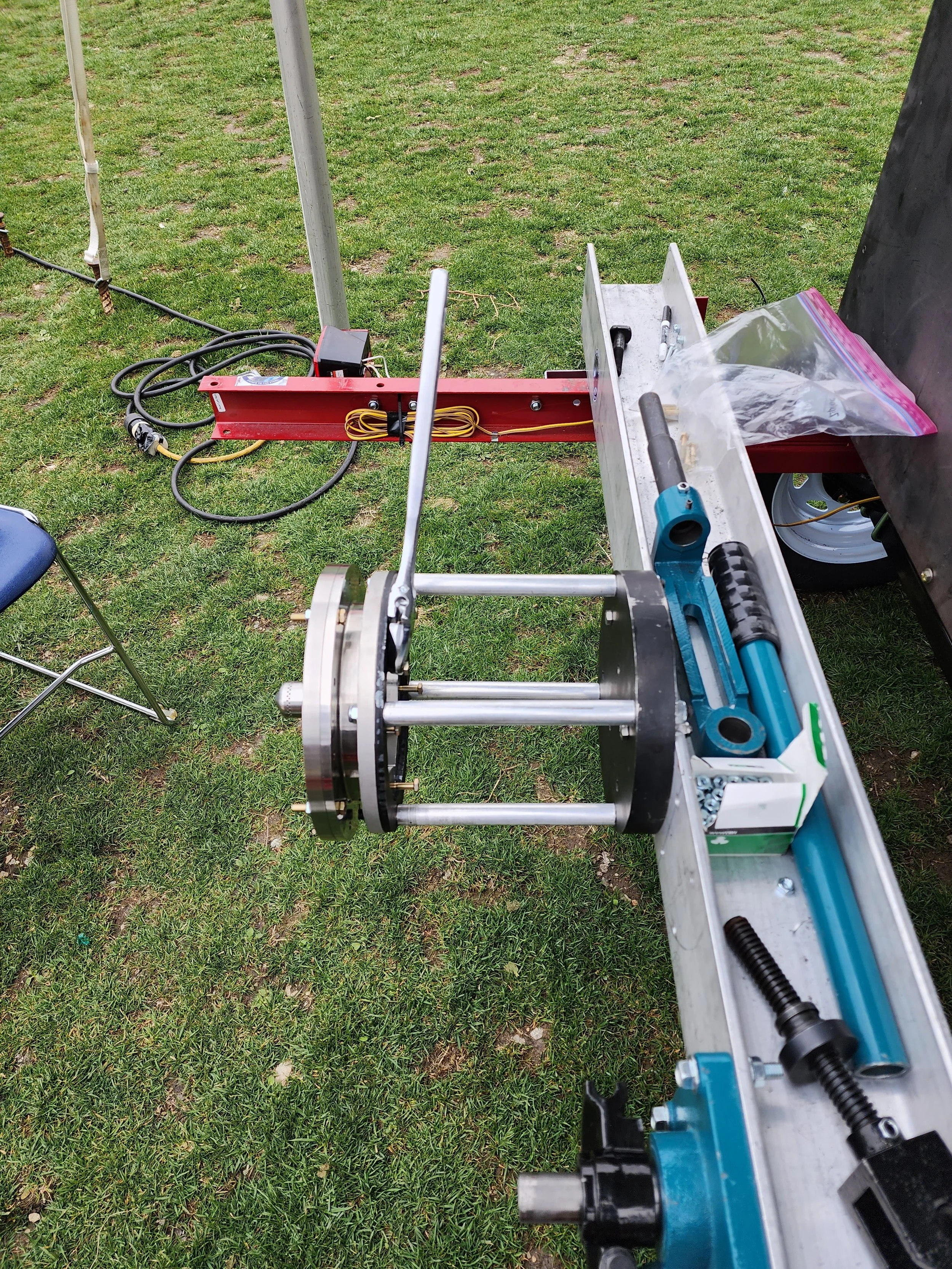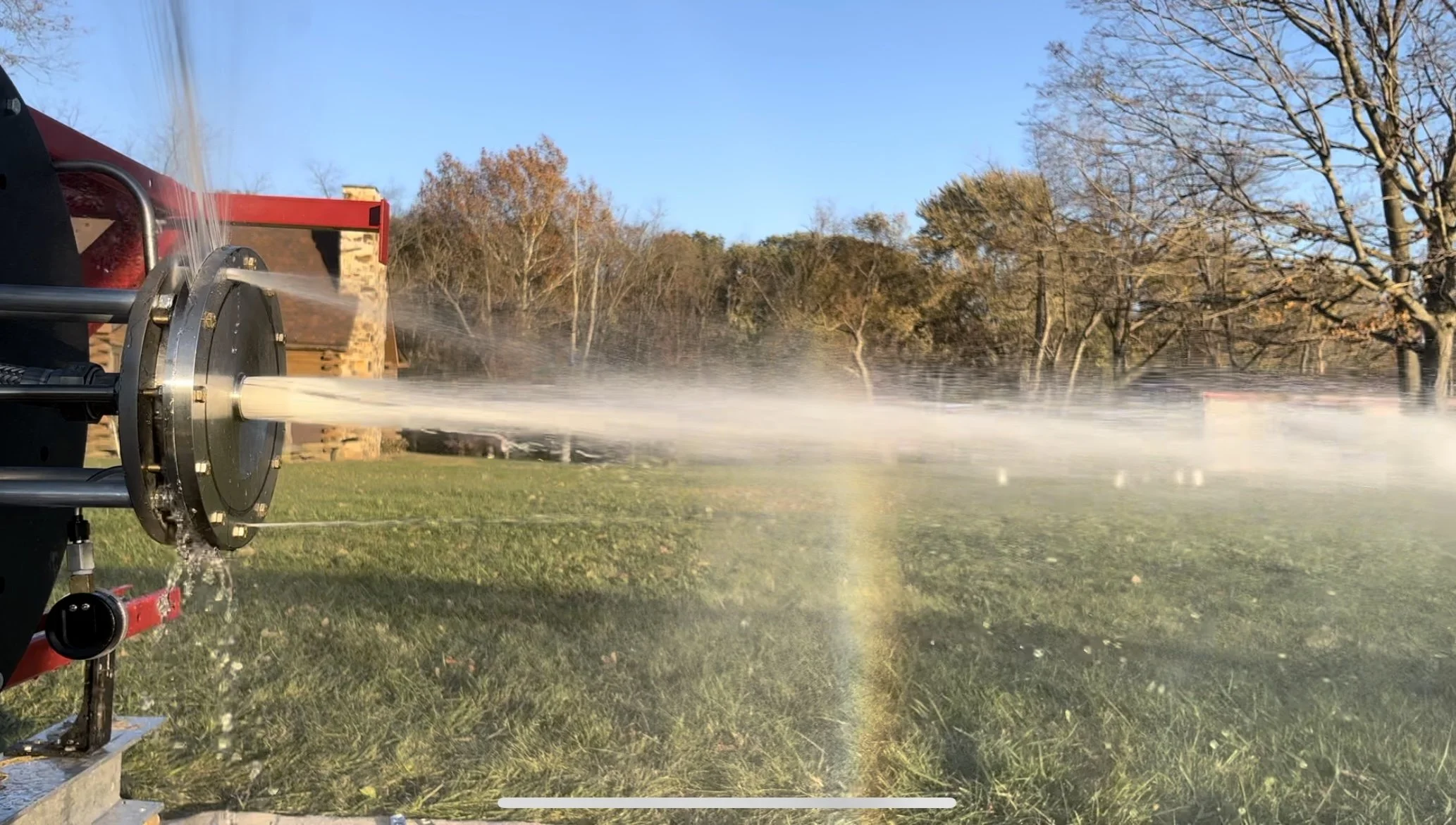
Rocket Engine Test - Stand
C.A.D.
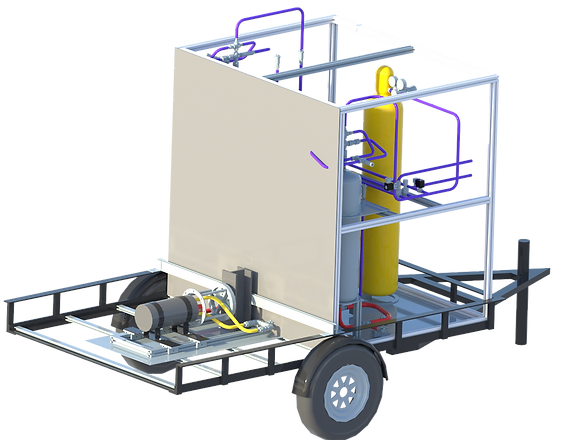
One of the first stages of the project was to produce a 3-D model of the entire rocket engine test stand to support the initial concept. This model helped us visualize the complete system, determine the placement of each component, and make sure the design could be manufactured and assembled.
-
Researched the main requirements and components of a rocket engine test stand
Determined the required space for the engine, tanks, piping, and supporting equipment
Planned the overall layout to create a safe and practical design
-
Created a complete 3D CAD model of the test stand and trailer structure
Integrated the engine, propellant tanks, piping, and other major components
Adjusted component placement to improve accessibility, assembly, and overall functionality
-
Produced a complete CAD model of the rocket engine test stand
Verified that all major components could fit and function within the available space
Created a design that could be used as a reference for manufacturing and assembly
Manufacturing
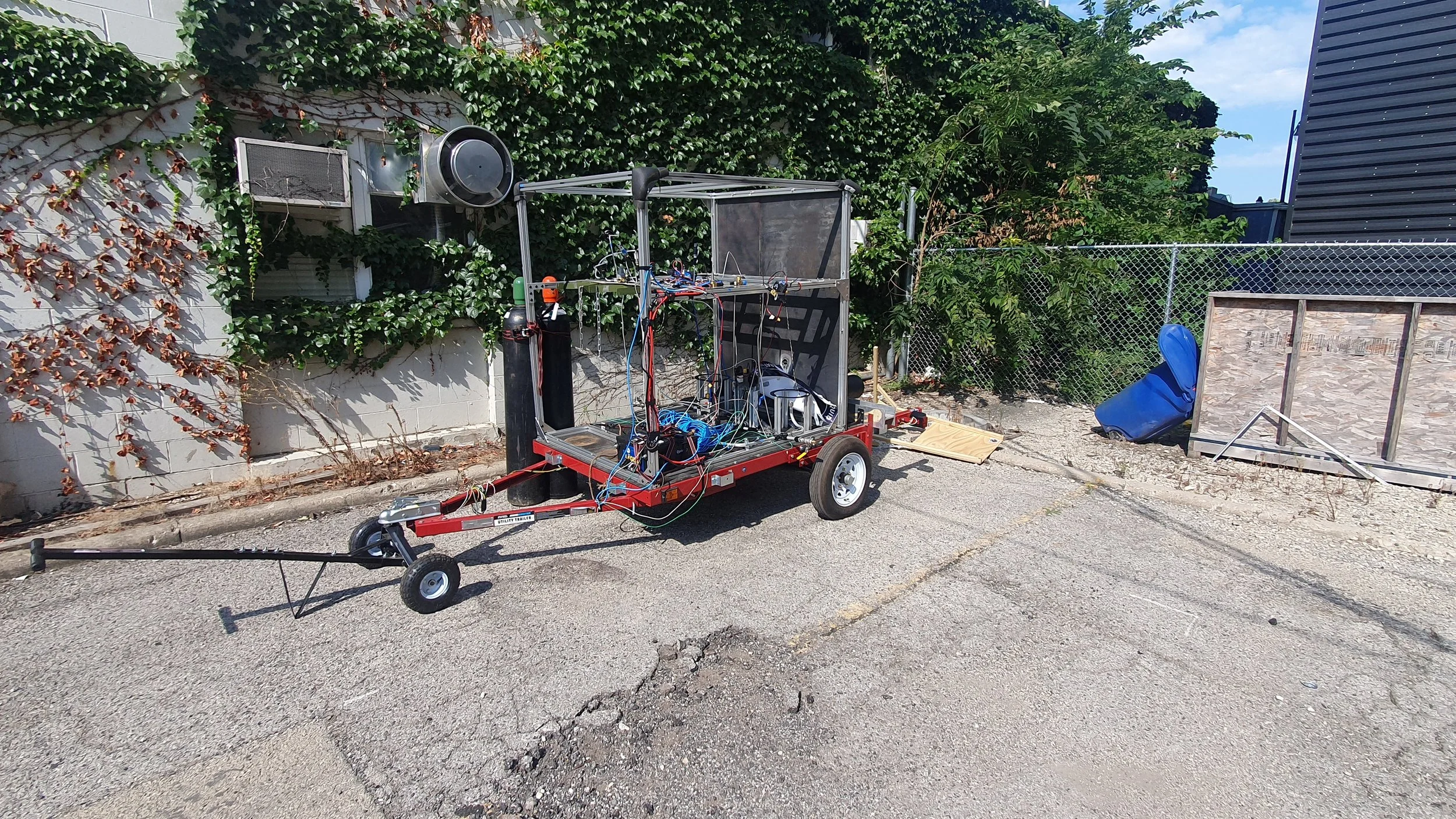
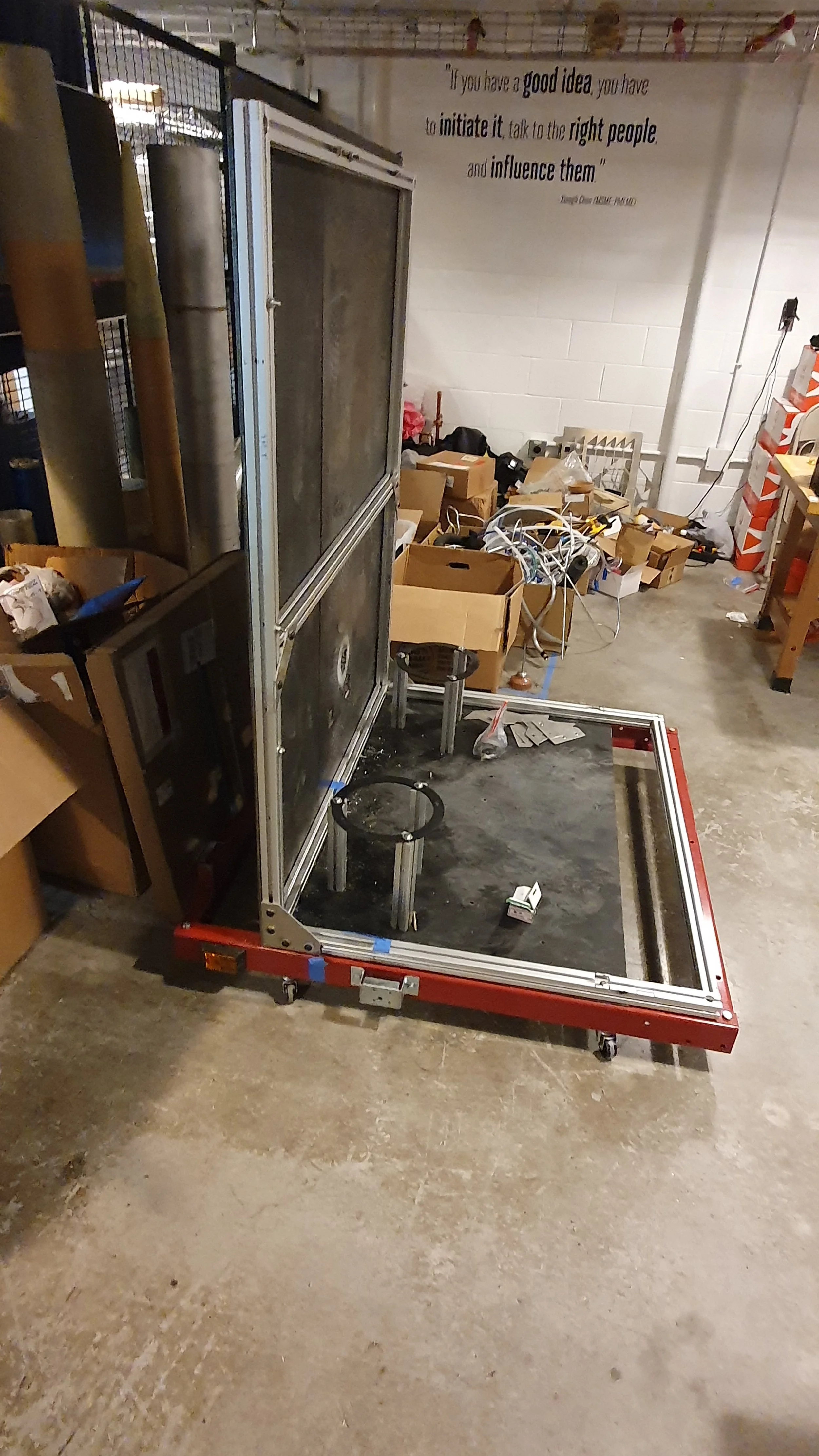
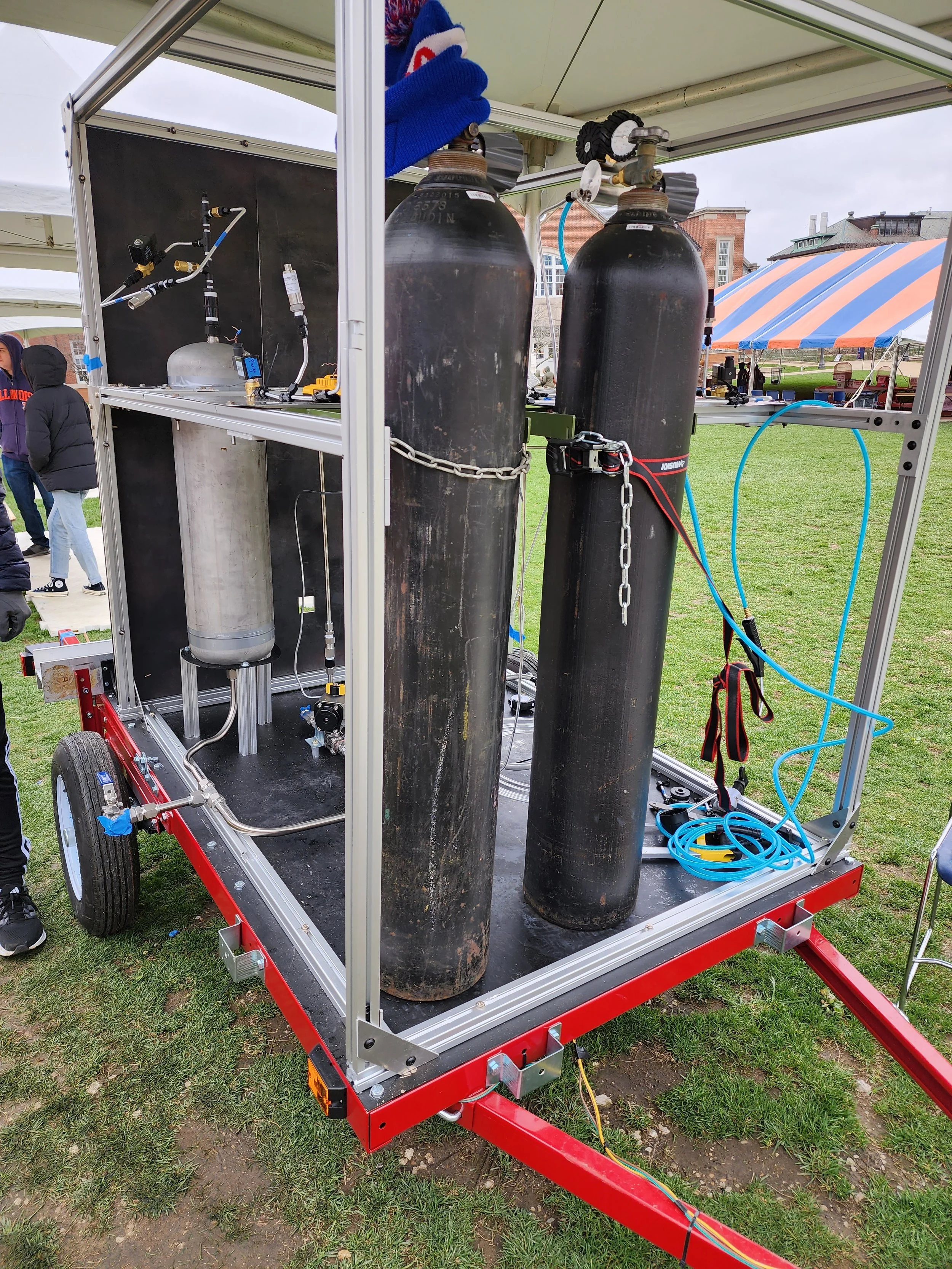
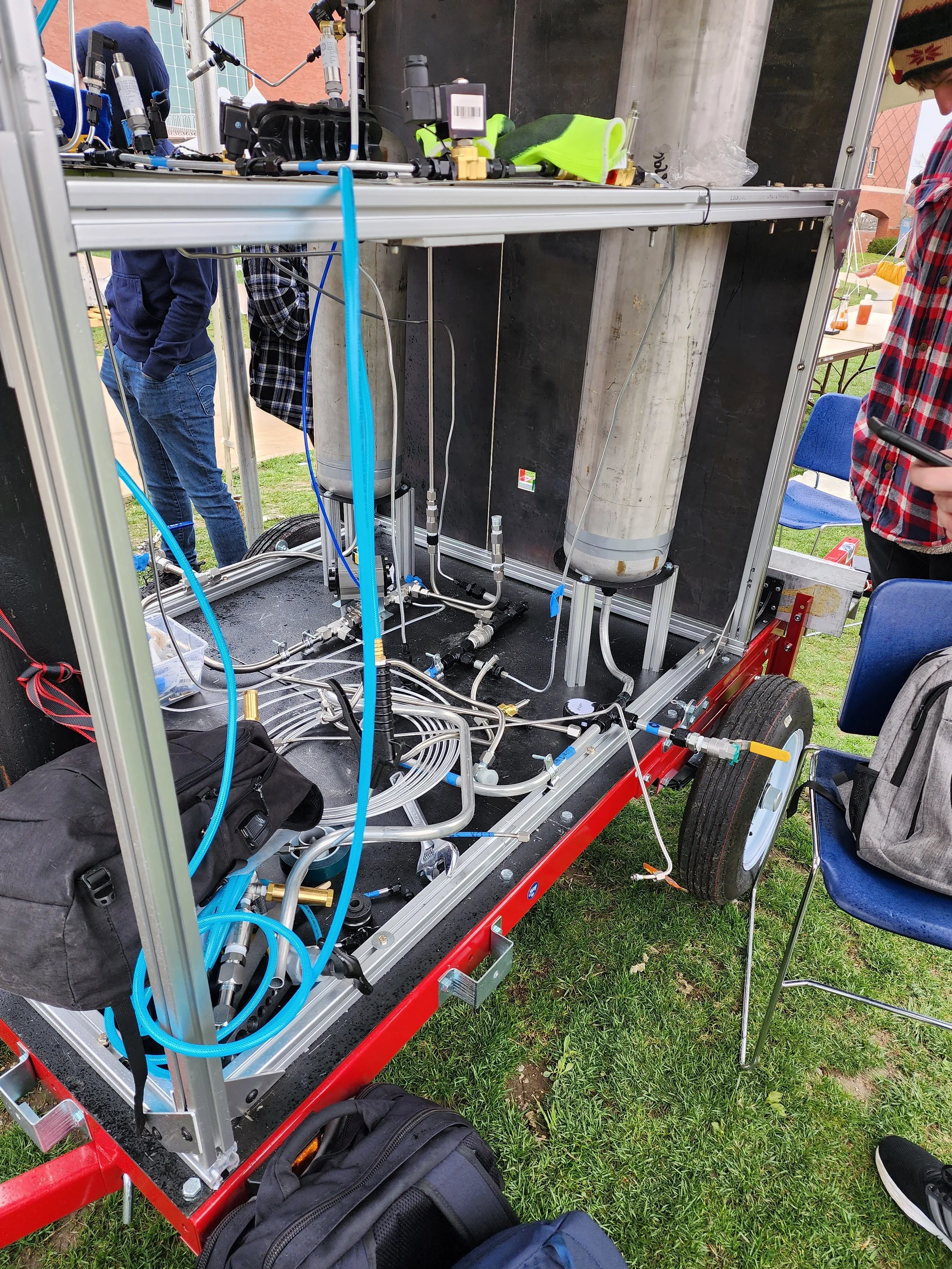
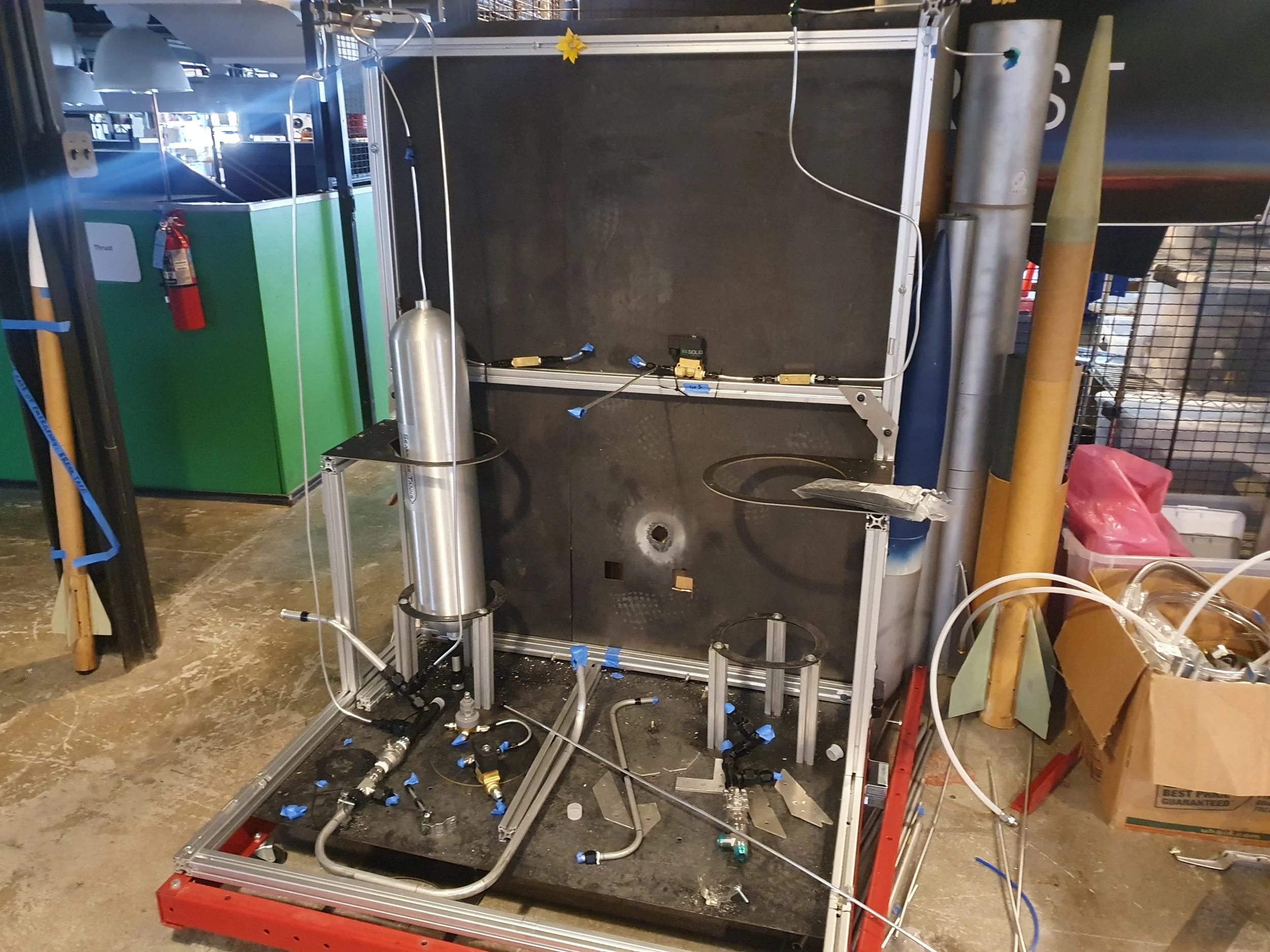
The next step after the 3-D model was completed was to manufacture and assemble the rocket engine test stand. The CAD design was used as a reference to build the structure and integrate all of the required components into the final system.
-
Reviewed the CAD model and determined how each component would be manufactured
Selected the materials and components required to construct the test stand
Planned the assembly process and placement of the engine, tanks, and supporting systems
-
Manufactured and assembled the main structural frame of the test stand
Installed the engine, tanks, piping, valves, and supporting equipment
Integrated the different systems onto the mobile trailer platform
-
Produced a fully assembled rocket engine test stand based on the original CAD design
Successfully integrated the structural, mechanical, and fluid systems into one platform
Created a functional test stand that could be used for future rocket engine testing
Testing
After the engine was manufactured, it was mounted onto our test stand and prepared for testing. Multiple tests were performed to verify that the system operated correctly and could safely handle the required flow. These tests also allowed us to evaluate the engine and supporting systems before moving toward more advanced testing.
Testing Methods:
Pressure Testing - Pressurized the system to check connections, seals, and components for potential leaks
Flow Testing - Ran liquid through the system to verify proper flow through the tanks, piping, and engine
Data Collection - Used sensors and measurement equipment to monitor the system and evaluate its performance during testing